

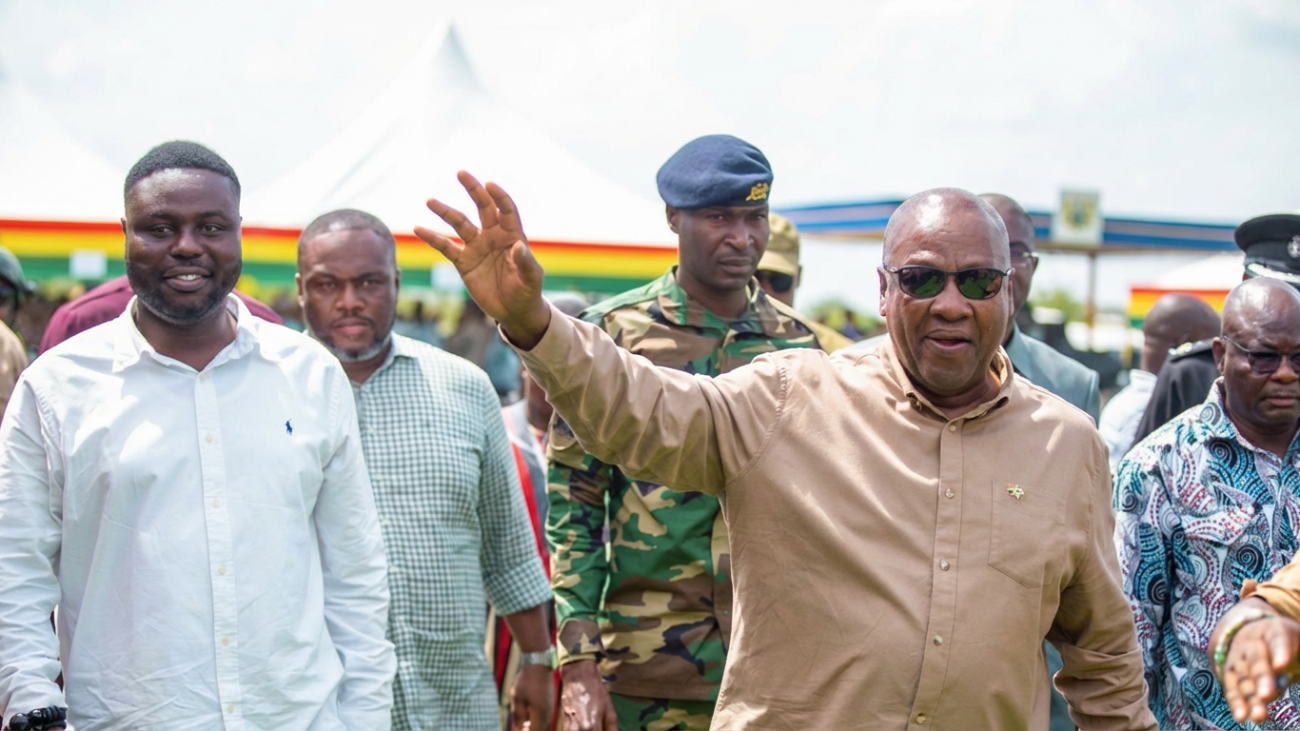
VOLTA REGION
Since assuming office as the Volta Region’s representative on the Council of State, and now one year into his tenure, H.E. Gabriel Tanko Kwamigah-Atokple has actively pursued an advocacy agenda centred on inclusive development, regional cohesion, and people-centred governance. His work has been guided by the conviction that the Volta Region’s development objectives can best be achieved through effective coordination between national policy direction and local implementation, supported by strong partnerships among state institutions, traditional authorities, and community stakeholders.
In advancing this agenda, H.E. Gabriel Tanko Kwamigah-Atokple has consistently engaged Municipal and District Assemblies, Presiding Members, traditional rulers, and opinion leaders across the region to promote a unified and results-oriented development vision. He has encouraged collaborative planning in priority sectors such as agriculture, aquaculture, tourism, youth employment, infrastructure development, and industrial growth, while advocating for the equitable distribution of national resources and development interventions across the Volta Region.
As part of his commitment to oversight and accountability, he has worked closely with the Volta Regional Minister and other relevant stakeholders to inspect ongoing road and infrastructure projects being implemented under the Government of Ghana’s “Big Push” agenda. These inspection visits have enabled the assessment of project progress, identification of implementation challenges, and advocacy for timely delivery and quality execution, with the objective of ensuring that road and infrastructure investments under the programme translate into improved connectivity and economic activity across the region.
In furtherance of his broader development advocacy, H.E. Gabriel Tanko Kwamigah-Atokple, together with the Volta Regional Minister, undertook a working tour of the Keta Harbour Project to gain first-hand understanding of the project’s scope, progress, and strategic importance. The visit formed part of his ongoing advocacy directed at central government and the private sector to explore collaborative approaches that would accelerate the development of the harbour and position it as a catalyst for economic growth. In particular, he has consistently highlighted the project’s potential to create sustainable employment opportunities for the teeming youth of the Volta Region and has called for strengthened public-private collaboration to unlock its full economic value.
A key aspect of his advocacy has been the promotion of unity and peaceful coexistence as foundations for sustainable development. Through engagements with traditional authorities, community leaders, and the general public at durbars, cultural festivals, and official functions, he has consistently called for consensus-building and collective responsibility, stressing that regional progress depends on stability, cooperation, and a shared sense of purpose among all stakeholders.
In addition to his domestic engagements, H.E. Gabriel Tanko Kwamigah-Atokple has pursued international outreach as a strategic tool for regional development. Within the first year of his tenure, he has undertaken engagements and tours in Europe and the United States of America, where he has interacted with diaspora groups, investors, development partners, and business leaders to promote investment opportunities in the Volta Region. These engagements have been driven by his strong belief in foreign direct investment and public-private partnerships as engines of growth, particularly in sectors such as agriculture, agro-processing, aquaculture, healthcare, tourism, and industrial development.
At the regional and community levels, he has undertaken extensive official visits across coastal, middle-belt, and inland districts of the Volta Region. These visits have enabled direct interaction with citizens, local authorities, and community groups, while providing first-hand insight into local development needs and opportunities. Notably, he has visited coastal communities affected by tidal waves and environmental challenges, combining advocacy with stakeholder engagement on disaster response, resilience, and long-term mitigation strategies.
His regional engagements have also extended to education, healthcare, youth empowerment, and social protection. Through community visits and related initiatives, he has supported access to education, promoted skills development among the youth, encouraged inclusive social support systems, and strengthened community-level participation in development processes. These activities reflect a holistic approach to development that integrates social welfare, economic empowerment, and institutional strengthening.
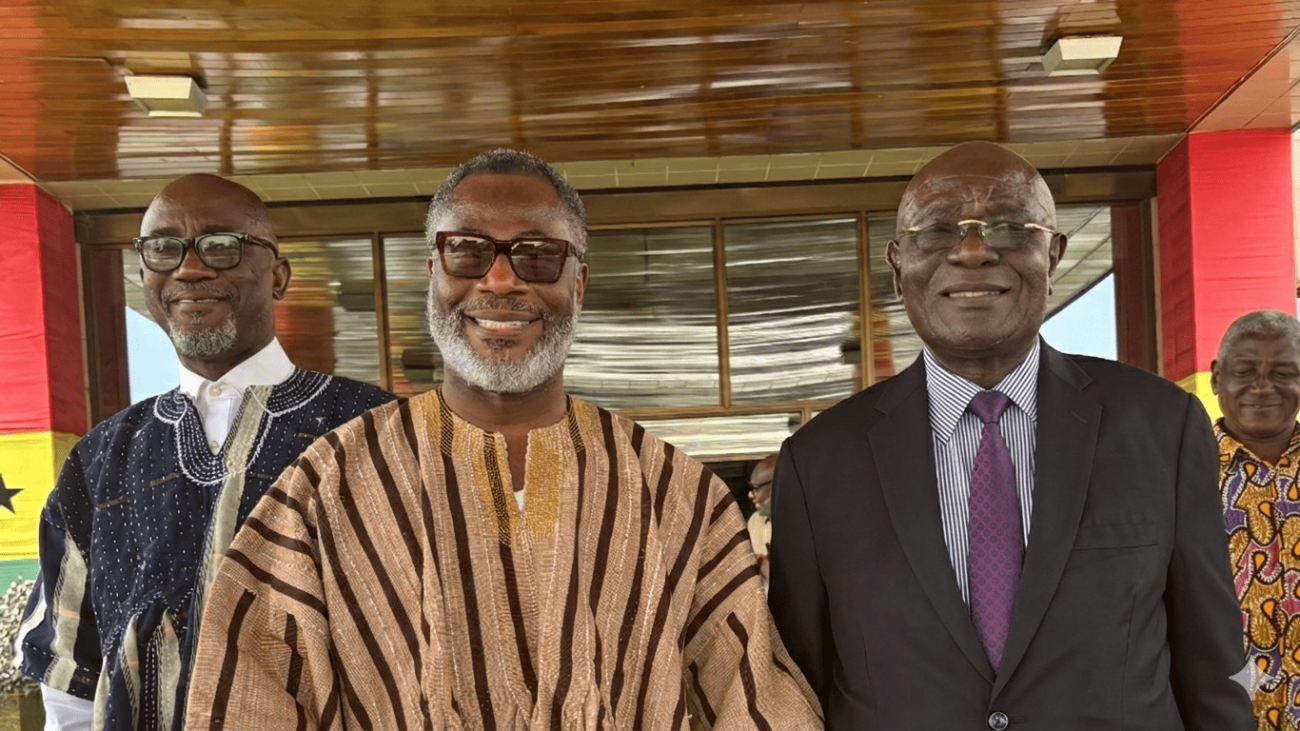
GREATER ACCRA REGION
H.E. HRM Drolor Bosso Admatey I has focused on advocacy, mediation, and developmental
engagement across the Greater Accra Region, with particular attention to
conflict resolution, social cohesion, and addressing pressing community
concerns.
A major aspect of HRM’s work has involved conflict resolution and mediation.
He has held meetings with traditional authorities to address chieftaincy
disputes and land litigations within the region, working to reduce tensions that
disrupt peace and development. These efforts have included engagement with
religious leaders, including Islamic leadership, to promote understanding,
unity, and peaceful coexistence among diverse communities.
HRM has also engaged government stakeholders and ministers on matters
affecting regional harmony. Notably, during the inauguration of a new
metropolitan mayor, HRM publicly delivered a message emphasizing unity,
collaboration, and collective responsibility in advancing peace and
development in the region.
Youth-related concerns have been an important focus of HRM’s advocacy. He
has listened to grievances from young people who feel marginalized,
particularly around employment and job promotions, education, health, and
social inclusion, and has worked to bring conflicting groups together through
dialogue and mediation to reduce agitation and social tension.
In addition to mediation, HRM has provided practical social support as part of
his advocacy efforts. Individuals seeking employment have been assisted
through referrals and recommendations to opportunities, including
placements outside the region where appropriate. Persons facing medical
challenges have also received support through advocacy and referrals to
relevant institutions.
From a developmental perspective, HRM has identified sanitation and urban
congestion as critical challenges affecting the Greater Accra Region. He has
consistently advocated for improved sanitation systems and practical
strategies to address congestion, recognizing their impact on public health,
productivity, and quality of life. Discussions have also explored humanitarian
and sister-city partnerships as potential avenues for supporting infrastructure
and urban development initiatives.
Throughout the term, HRM has remained accessible to communities across
Greater Accra, listening to public concerns and working with traditional
leaders, religious authorities, and public officials to resolve issues through
consultation, mediation, and collaboration. These efforts contribute to social
stability, trust-building, and the broader developmental objectives of the
region, in line with the advisory expectations of the Council of State.